At Virginia Natural Gas, proper installation, regular maintenance and safe ventilation help protect your home and family. Review the guidance below for furnaces, water heaters, gas detectors and appliance connections.
Natural Gas Appliance and Leak Safety
Following these guidelines helps protect you, your family and your community, and ensures your natural gas appliances continue to operate safely and efficiently.
- Never attempt to install, repair or move a natural gas appliance or meter on your own.
- Always use a qualified contractor or licensed professional for appliance installation, maintenance or repair.
- Keep the area around your natural gas meter and appliances clear of debris and accessible at all times.
- If you notice damage, smell natural gas or hear a hissing sound, leave the area immediately and call 911 and Virginia Natural Gas at 866.229.3578 from a safe location.
- Do not try to locate or stop a leak yourself, and avoid using electrical devices, phones or open flames near a suspected leak.


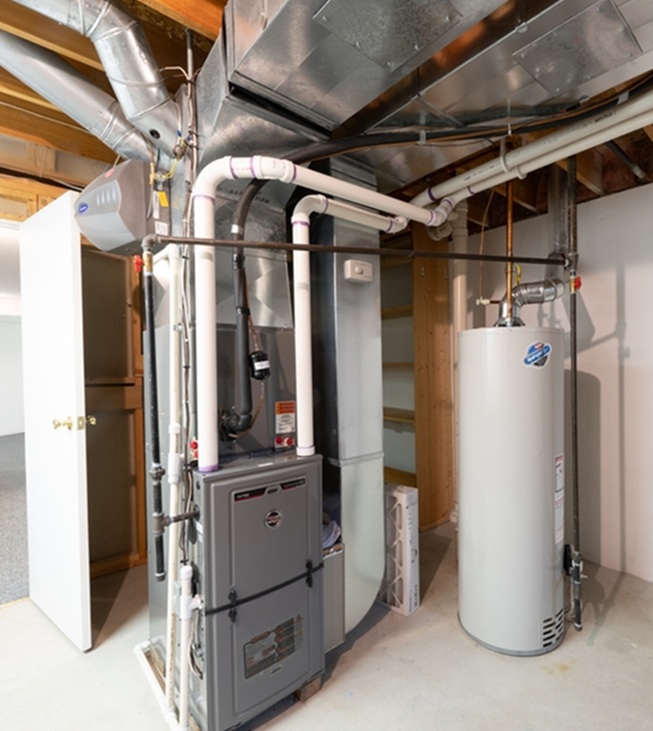
Furnace and Venting Safety
Important information about furnaces according
to the Federal Emergency Management Agency:
- It’s important that you have your furnace inspected by a qualified specialist according to manufacturer guidelines to ensure that it is in good working condition. Do not attempt repairs yourself unless you are qualified. See furnace maintenance tips here
- Be sure all furnace controls and emergency shutoffs are in proper working condition.
- Keep trash and other combustible material away from your heating and water heating systems.
- Keep natural gas vents unobstructed and free of debris. Some direct-vent and high-efficiency appliances have direct side wall outdoor vents and air intakes that could become obstructed during heavy snowfalls.
- Keep sidewall vents clear of snow, ice, debris and vegetation. These vents bring in fresh air and release exhaust from high-efficiency heating systems. If blocked, they can shut down the equipment or allow carbon monoxide-containing exhaust to enter the home.
Heating System Warning Signs
- Gas flames that are pale yellow or wavy
- Gas appliances that are not vented to the outdoors
- Rust, corrosion or excessive dust on gas appliances
- Excessively dirty, clogged or missing furnace air filters
- Gas appliance valves that are missing or not properly installed
- Blocked, broken, rusted, disconnected, corroded or unsealed appliance vent piping
- Soot near burners or appliance venting
- Venting not approved by the appliance manufacturer or not venting to the proper place outdoors
- Evidence of discoloration at the appliance burner, burner access door or vent area
- Gas appliances installed in a garage less than 18 inches above the garage floor
- Gas appliances that are missing a fire door
Water Heater Safety
The U.S. Consumer Product Safety Commission urges all users to lower their water heaters to 120 degrees Fahrenheit.
A thermostat setting of 120 degrees Fahrenheit (49 degrees Celsius) may be necessary for residential water heaters to reduce or eliminate the risk of most tap water scald injuries. Consumers should consider lowering the thermostat to the lowest settings that will satisfy hot water needs for all clothing and dish washing machines.
Never take hot water temperature for granted. Always hand test before using, especially when bathing children and infants.
How to test your water temperature:
- Run the hot water for five minutes.
- Put a reliable thermometer that registers at least 150 degrees under the water stream.
- If your water is more than 125 degrees, lower the thermostat on your water heater. If you can't find the temperature controls or have any questions, call a qualified contractor or your landlord for help.


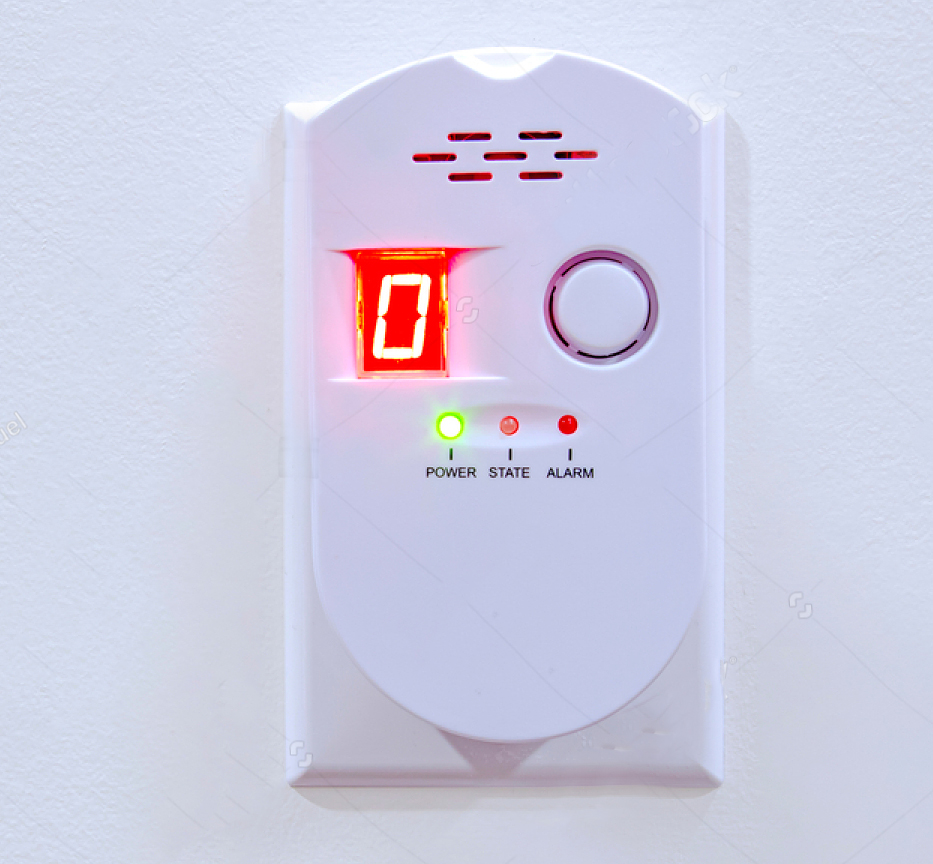
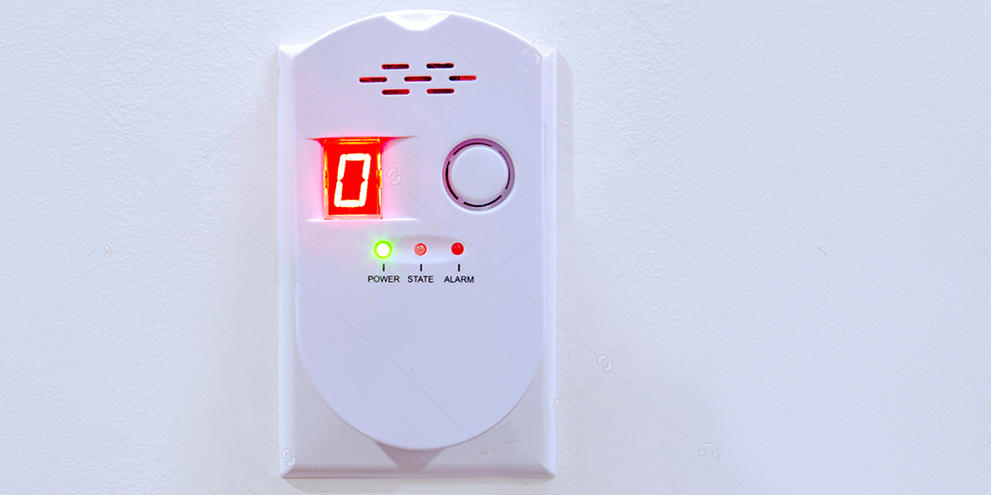
Natural Gas Detector Safety
Natural gas detectors may be installed by homeowners for an additional safeguard to detect leaks. The natural gas detector measures the concentration of methane in the air and sounds an alarm to alert you before dangerous levels are reached.
The methane detector works by pulling in air from the surroundings and, if it detects a dangerous level of natural gas in your home its light will flash and/or it will emit a loud noise. Please refer to your user’s manual for the detector for specific natural gas alarm characteristics. It’s also important to test the device regularly. Please refer to your user’s manual for testing intervals and the procedures that explain the light and sound patterns to ensure the detector and alarm functions are working properly.
If the natural gas detector alarm sounds, respond immediately!
Assume there’s a natural gas leak. Leave the area quickly, taking everyone with you.
Follow the guidelines for when you smell gas - DO NOT use the telephone or any electrical appliances including light switches, garage door openers, doorbells, radios, TVs or cell phones. A spark from any of these sources could ignite the gas, causing a fire or explosion.
DO NOT disconnect the gas detector battery to silence the alarm. A spark could cause an explosion.
DO NOT assume someone else will report the leak.
DO NOT go back inside your home or building until company or emergency personnel say it is safe to return.
Additional Safety Topics
Explore additional guidance on heating-system warning signs, Red Tags, appliance connectors and supplemental heating. These topics provide practical steps to reduce hazards and help keep your home and natural gas equipment safe.
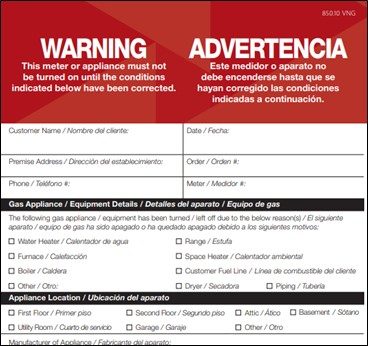
Have you received a RED TAG?
Have you received a RED TAG?
RED TAGS are placed on natural gas meters or appliances by our field service technicians to identify and flag an unsafe condition. Our RED TAGS provide clear and concise instructions on the steps that need to be taken to resolve the hazardous condition and restore gas service. Any red tag issues need to be addressed as soon as possible.
What do I need to do next?
DO NOT connect or use the tagged appliance(s) or customer piping until you have a properly licensed and qualified contractor/person perform the necessary repairs. For appliance repairs and maintenance, you can reach out to one of our Qualified Gas Contractors – Preferred program members using the Find a Contractor tool. Once the conditions indicated on the RED TAG have been resolved, you will need to notify your city agency listed on the back of the tag for inspection.
Appliance Connectors
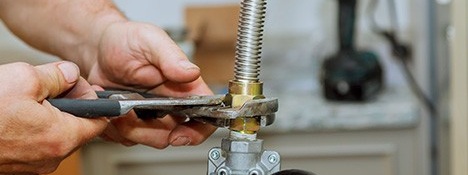
Appliance Connectors
Good appliance connectors are a very important part in keeping your house safe.
Furnace Maintenance
- Clean air filters regularly and replace as needed.
- Ensure furnace panels and grills are in place and that the fan compartment door is closed when the furnace is on. Leaving these doors open can cause carbon monoxide to build up.
- Check to see that the furnace or boiler is free of dust, rust or corrosion.
- Keep the space around the furnace clean and clear.
Space Heater Safety
- Never use a gas range as a space heater. Doing so can cause carbon monoxide to build-up.
- Put space heaters on a level surface and keep them away from curtains and other flammable objects.
- If you use a natural gas or kerosene space heater, be sure it is vented to the outside.
Find a Contractor
Preferred program members can use our find a contractor tool to contact one of our Qualified Gas Contractors for appliance repairs and maintenance.